
Start with the actual condition
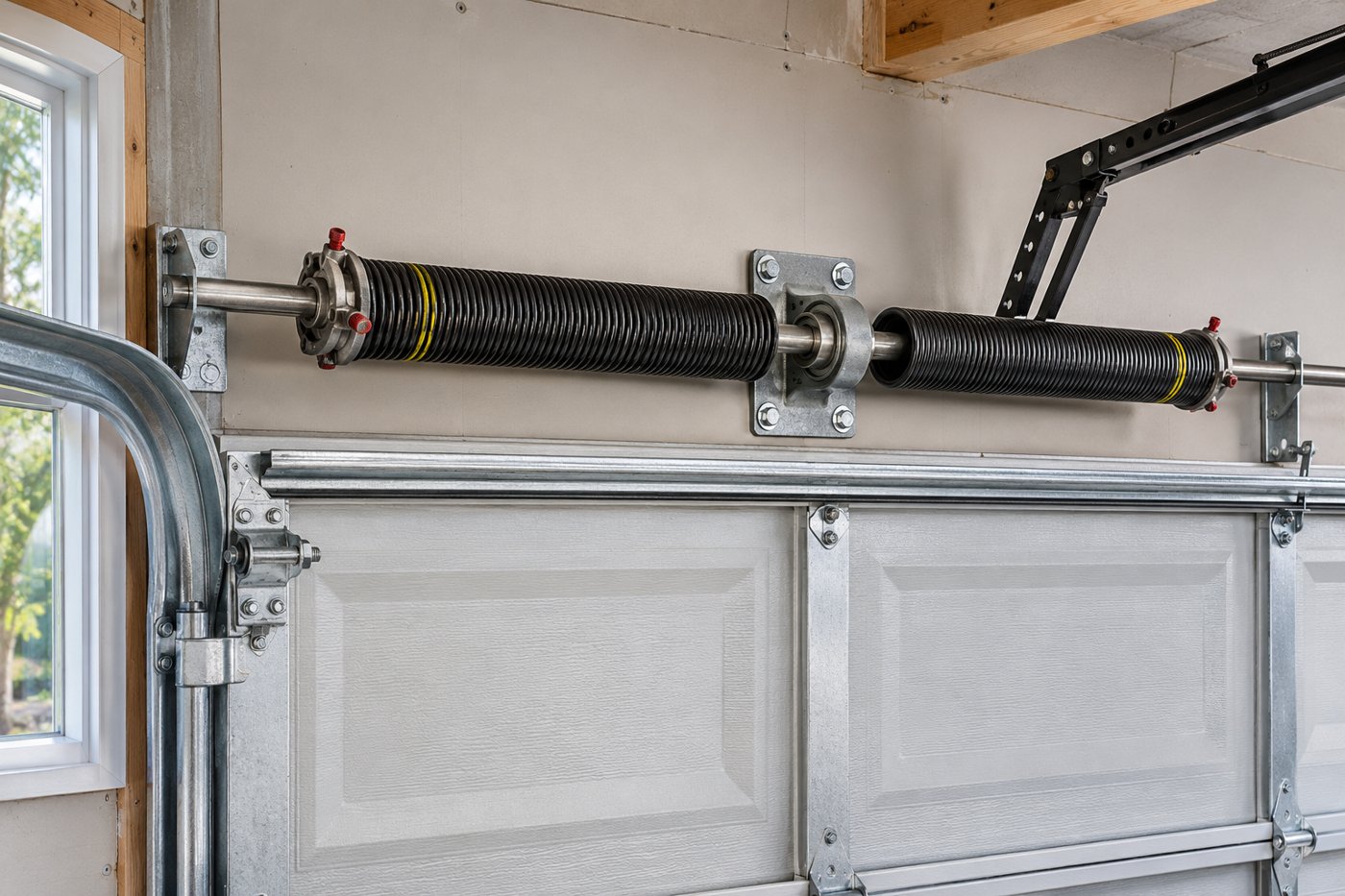
A garage-door decision starts with identifying the system that stopped working. The panels, counterbalance, tracks and electric operator have separate jobs. Knowing which part is affected helps you ask useful questions without assuming that every fault requires a new door.
A practical triage order
First, look at the door position from a safe distance. A door resting squarely on the floor can present a different inspection problem from one hanging unevenly above a vehicle. Do not stand underneath a raised door or move it to get a better picture. Keep the approach clear and describe the position during the call.
Next, recall the sequence. A sudden bang before the motor began straining points the conversation toward the lifting hardware. A remote that stopped working while the wall button still works points toward controls. A scrape that gradually became worse needs attention to travel and hardware. These are clues, not diagnoses.
Decide what needs assessment
| Observation | What to ask about |
|---|---|
| Door tilted in its opening | Cable, drum, track and load control |
| Motor running without door movement | Drive connection and mechanical condition |
| One impact-damaged section | Exact compatible panel availability |
| Widespread distortion or separation | Structural condition of the full door |
| Noise with otherwise consistent travel | Rollers, hinges, mountings and maintenance |
The technician should explain which observation supports the proposed scope. Avoid deciding from age alone. A sound door with a failed wearable part and a structurally damaged assembly can be the same age and need different work.
Ask what can be retained
For a panel repair, exact joint profile, model and dimensions matter. A visually similar section may not be compatible. Ask whether the finish will match the weathered door and distinguish appearance from structural suitability.
For replacement, ask which tracks, springs and operator components are approved for the new assembly. Door weight may change even if the opening stays the same. A retained opener still needs a sound, balanced door. Compatibility should follow the selected manufacturer instructions.
Consider Denver access conditions
An alley-facing detached garage may be the only vehicle exit. An attached garage may carry most household foot traffic. Mention those circumstances together with your postal ZIP. A broad Denver mailing address does not establish coverage; the listed ZIP footprint is the service boundary.
Cold weather can add an obstruction, such as ice at the bottom seal, without proving that the motor is faulty. Report whether the threshold was clear and whether the behavior persists in other conditions. Do not force the opener to separate a frozen seal from the slab.
Check the proposed handover
Ask how smooth travel, balance and safety functions will be verified. A motor running once is not a complete inspection. Request model information and a clear explanation of the work and any remaining limitations. Routine care is easier when the actual door and opener manuals are available.
Choose garage-door replacement assessment when comparing whole-system options. For a single sudden failure, spring repair or opener diagnosis may be the more relevant starting conversation.
Technical references and next steps
Consult the DASMA garage-door safety guidance and CPSC opener safety information, together with the actual equipment manual. For sunlight-specific sensor behavior, see Chamberlain Group support.
Call with the door position, observed symptom and postal ZIP. Local scope and scheduling are confirmed by phone. Keep people clear of a visibly damaged or suspended door.