
Start with the actual condition
The best-fitting opener is the one compatible with the door, available space and access needs. Compare those practical conditions before shopping by a motor label. A door that is heavy or binding must be assessed before a new drive is expected to move it.
Resolve the existing symptom first
If a remote fails but the wall control works, describe that distinction. If the motor runs while the door stays still, report the drive behavior. If the door jerks, leans or strains, stop using it and describe the mechanical movement. The diagnosis may concern a control, a drive part or the door itself.
Replacement electronics will not fix bent tracks or a broken spring. Ask whether the mechanical door condition has been checked separately. Keep the model information for both the door and operator when it is safely accessible.
Compare drive layouts realistically
| Choice | Check before deciding |
|---|---|
| Belt drive | Door compatibility, rail clearance and sound priorities |
| Chain drive | Approved mounting, travel and maintenance requirements |
| Wall-mounted unit | Compatible torsion system and side clearance |
| Low-headroom solution | Exact manufacturer requirements for the door and operator |
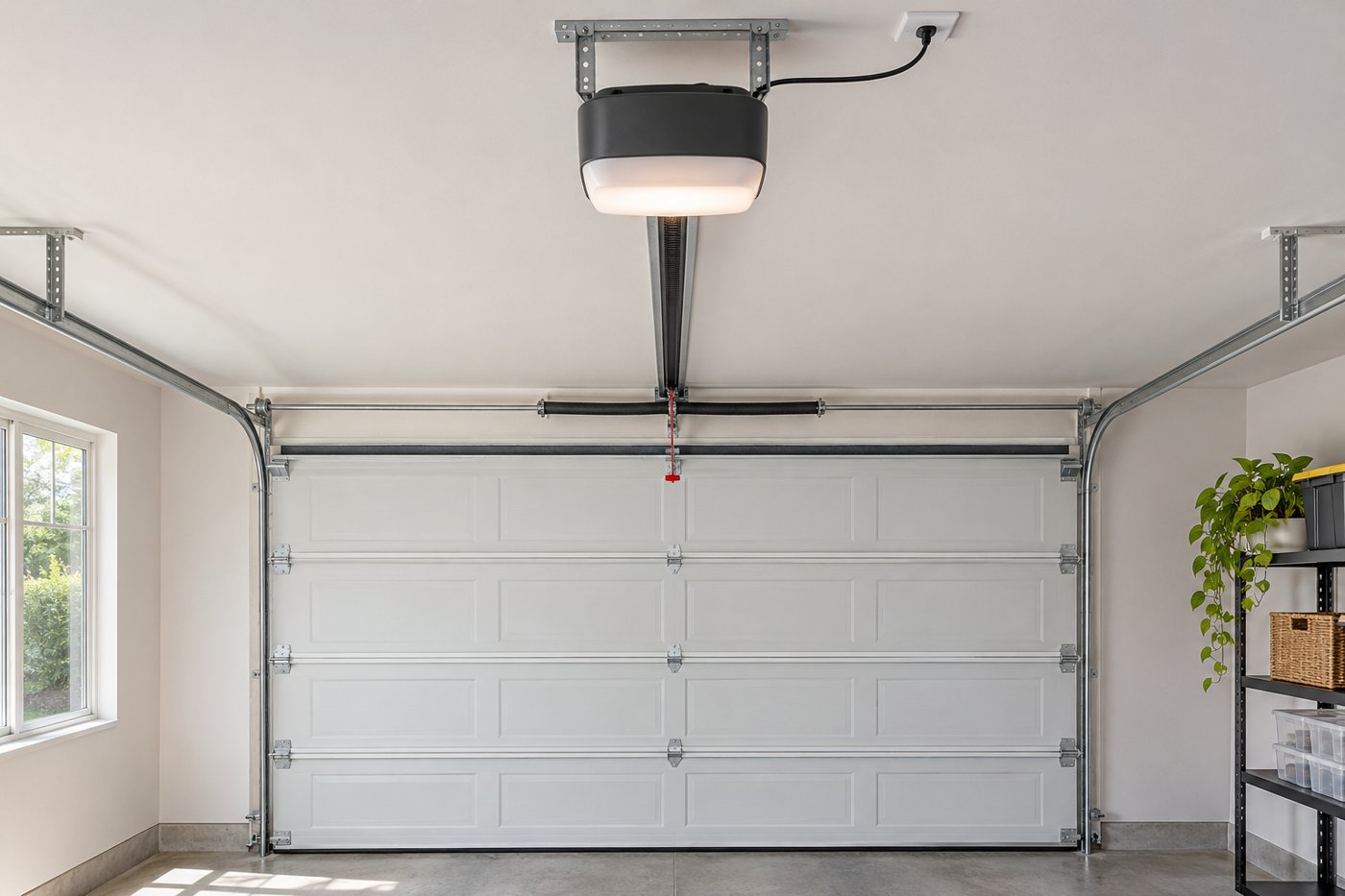
A side-mounted operator can suit some layouts with overhead storage. It is not a universal solution for every torsion shaft or opening. A conventional rail also needs a secure mounting path free of building obstructions. Final measurements belong to the installation assessment.
Ask about the whole sound path
Where a bedroom or living space adjoins the garage, sound and vibration matter. Drive type is only one influence. Worn rollers, loose hinges, mounting hardware and the building frame can transfer vibration. Diagnose the existing noise rather than assuming a quieter motor resolves it all.
Tell the installer whether the sound happens at startup, during full travel or when a panel passes a particular point. That sequence is useful when deciding what needs attention alongside the new operator.
Plan the controls and power
Confirm included remotes, keypad access and any connected features. Ask how old transmitters are removed and how an account will be handed over. Keep personal account details private during the general inquiry. Understand local operation if Wi-Fi is unavailable.
If battery backup is selected, discuss the model’s operation and upkeep. A backup feature has limits and does not replace a mechanically sound door. Electrical changes should be handled by the appropriate trade; confirm responsibility before installation.
Make the handover count
The setup should include travel and safety checks under the manufacturer instructions. Ask how to use the controls and emergency release safely and keep the manual. A working phone app is not proof that entrapment protection has been tested.
Use opener installation for a planned change, or opener repair when the existing symptom needs diagnosis. For a door that opens but refuses to close, the sensor guide provides a better starting set of observations.
Technical references and next steps
Consult the DASMA garage-door safety guidance and CPSC opener safety information, together with the actual equipment manual. For sunlight-specific sensor behavior, see Chamberlain Group support.
Call with the door position, observed symptom and postal ZIP. Local scope and scheduling are confirmed by phone. Keep people clear of a visibly damaged or suspended door.